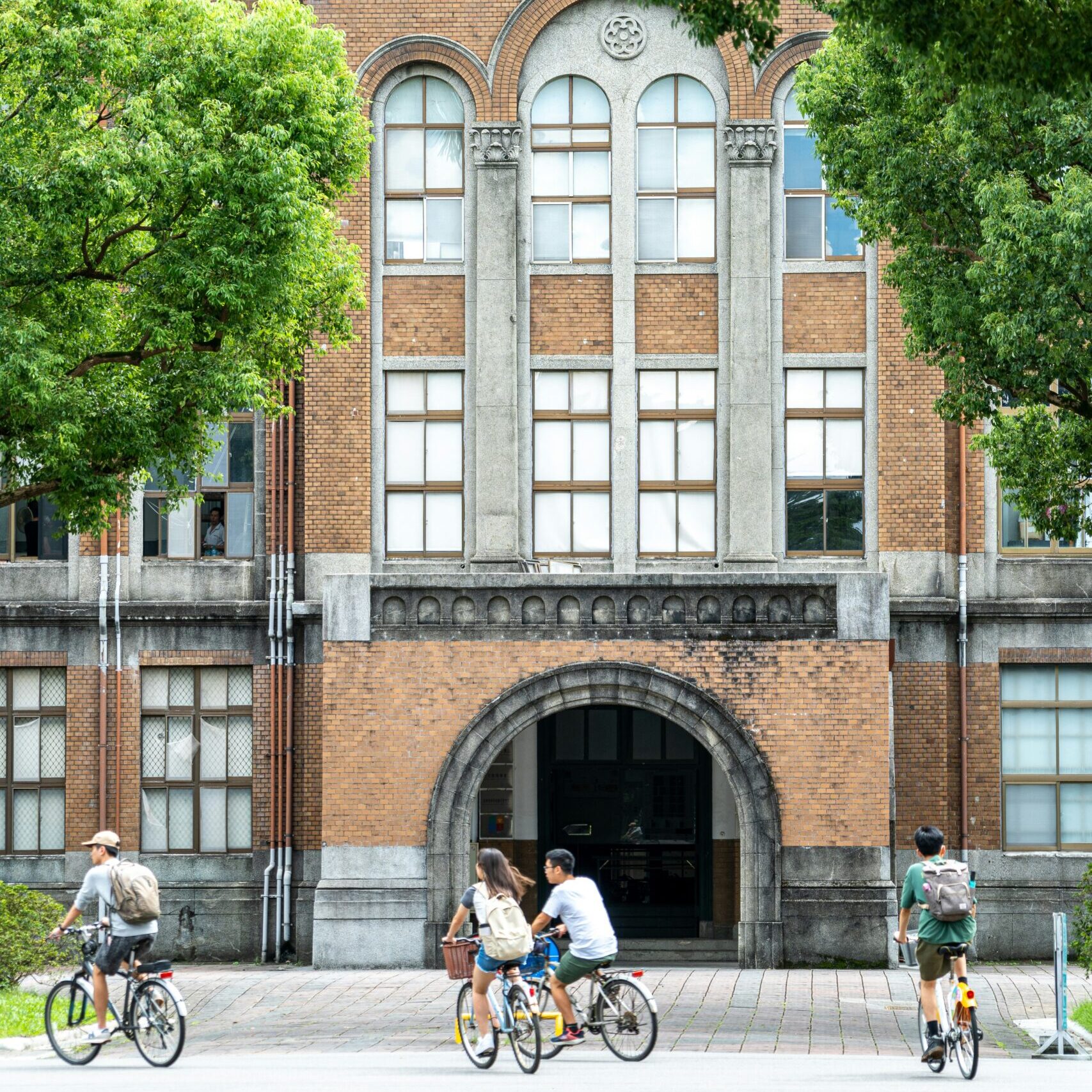
In recent years, churches in Taiwan have felt a growing burden for the gospel in Japan. Many churches now send regular short-term mission and vision teams to Japan each year, building deep relationships and fellowship in Christ with local churches there. Yet while we cross the sea to share the gospel, God is doing something wonderful as well—he has personally brought young Japanese souls from the land of the rising sun to Taiwan, this sweet-potato-shaped field.
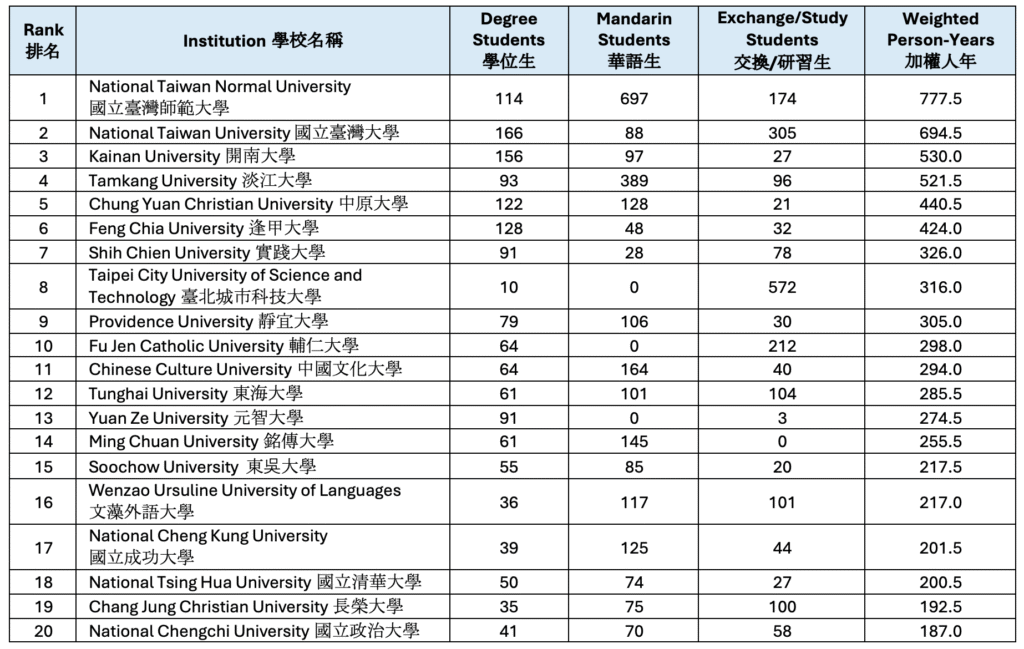
According to figures released by Taiwan’s Ministry of Education for the 2025 academic year, Japanese students continue to rank fourth among all international students in Taiwan by nationality. Although the total remains a little over 8,000, a closer look reveals a qualitative shift. In the past, most Japanese students came for short-term exchanges or Mandarin study. Today, a growing proportion are pursuing degrees at the bachelor’s, master’s, and doctoral levels. Their distribution has also expanded beyond traditional academic institutions, such as National Taiwan University and National Taiwan Normal University, into vocational and technical schools, such as Taipei City University of Science and Technology. These future Japanese elites and technical professionals are arriving in groups and setting foot on Taiwan’s sweet potato field.
As Christians, we cannot view this merely as a change in education statistics. Through the push of geopolitics, including rising anti-Japanese sentiment inside China, and the pull of Taiwan’s globally leading semiconductor-related industries, God is bringing these young people from a spiritually resistant field right to our doorstep.Does the church in Taiwan recognize this opportunity for “mission at our front door”?
1. Reading the Trend: A 2025 Mission Map of Japanese Students
According to the latest data (see appendix), Japanese students in Taiwan are both highly concentrated and diverse in profile. This gives churches concrete places where they can focus ministry and service:
- Mandarin and cross-cultural hubs: National Taiwan Normal University and Tamkang University rank near the top. Many of these students are short-term learners or language students. Their loneliness in a foreign country is often strongest during this season, making it a golden window for friendship.
- Vocational education and exchanges—an emerging field: Taipei City University of Science and Technology and Wenzao Ursuline University of Languages have received large numbers of exchange and study students. This shows that Japanese young people are seeking practical technical exchange. Christian professionals in related industries can offer an excellent point of connection.
- Advanced academics and industry centers: National Taiwan University and National Cheng Kung University attract leading STEM students. As Taiwan’s semiconductor-related industries compete for this talent, the church should also ask how to engage them at the heart level.
2. A Ministry Posture for Receiving Japanese Students: Practical Counsel from Kawaji
When we face this new generation of Japanese young people, enthusiasm alone is not enough. Kawaji, a Japanese minister with Tainan Holiness Church, has shared valuable practical wisdom for ministry. As we cultivate Taiwan’s sweet potato field, she reminds us that we must understand the distinctive soil of Japanese hearts:
- Set aside religious trappings; let character carry persuasive weight: Many young Japanese today are sensitive toward religious organizations. Invitations to explicitly religious activities, especially when too direct, can easily create resistance. For Japanese people, behavior speaks louder than theology. A Christian’s character, integrity, and conduct in daily life often touch them more deeply than profound theories spoken aloud.
- Offer non-coercive love and provide a safe space: Japanese culture often finds it difficult to say no directly. Overly eager invitations can create social pressure. True love does not force. It allows them to feel free within a community rather than feeling like a target being watched.
- Begin with everyday life and build bonds of kizuna: Make use of the Japanese cultural value of reciprocity. Natural interaction can grow through language exchanges, local-life orientation, or even the simplest caring greeting. Many Japanese students come to Taiwan hoping to experience real Taiwanese life. If churches can help them enter local communities, this two-way friendship can become a strong foundation.
- Remember that this is a lifelong decision: In Kawaji’s observation, Japanese people do not make commitments lightly. But once they decide to follow the Lord, that decision often becomes a lifelong commitment. The church’s companionship, therefore, must be patient and long-term.
3. From Visiting Japan to Receiving Japanese Students Locally
The church in Taiwan already has rich experience in mission visits to Japan. This gives us an excellent foundation. Now is the time to convert that energy into local hospitality:
- Extending short-term mission experience: We have already learned much about Japanese etiquette and cultural sensitivities. That knowledge should be applied directly as we receive Japanese students near our campuses.
- Building transnational gospel links: Through existing ministry networks and denominational partners, such as the Japan Holiness Church, we can connect students who come to faith in Taiwan with partner churches back in Japan. This addresses the painful problem of students losing church connection after returning home.
- Responding to their desire for local experience: The data also show significant numbers of Japanese students at institutions such as Chang Jung Christian University and Tunghai University. These students long to interact with local Taiwanese people. Churches have a unique advantage as local, intergenerational communities.
Conclusion: Planting Cherry-Blossom Gospel Seeds in the Sweet Potato Field
Taiwan’s semiconductor-related industries see the potential of Japanese young people. Through industry-academia cooperation, they attract these students with generous conditions (see note). The church in Taiwan should see their eternal worth and welcome them with the love of Christ.
“When Cherry Blossoms Fall in the Sweet Potato Field” is more than a story of population movement. It is a sacred sending arranged by God. May the Lord open the eyes of the church in Taiwan. May we learn from the wisdom Kawaji has shared and receive these nearly 9,000 Japanese young people near our own campuses with non-coercive love, honorable character, and patient companionship.
May we carefully nurture these cherry-blossom seeds in the sweet potato field until, in the love of Christ, they flower and bear fruit, becoming gospel pioneers who will help shape the future of both Taiwan and Japan.
Appendix: Top 20 Taiwan Institutions for Japanese Students in 2025 (Weighted Ranking)
Weighted Person-Year Ranking for Japanese Students (Top 20)
Explanation of the Weighting Method
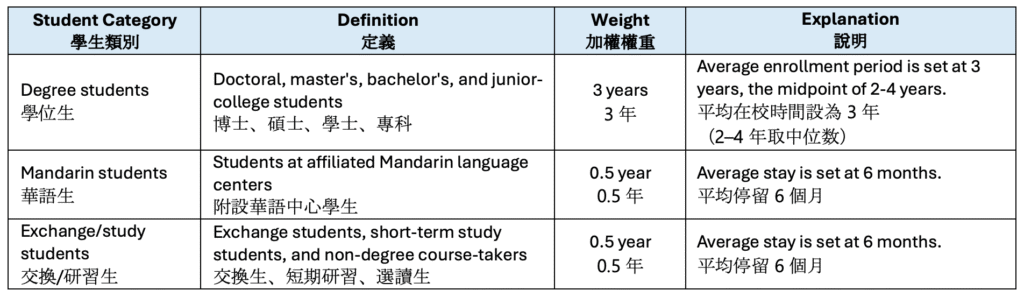
Weighted person-years = degree students x 3 + Mandarin students x 0.5 + exchange/study students x 0.5. The ranking is sorted by weighted person-years, from highest to lowest.
Author’s Note: National Yunlin University of Science and Technology (YunTech) and TSMC have signed a cooperative plan for a semiconductor program. Recruitment gives priority to Japanese students. Tuition is subsidized by the university, and participating companies provide a monthly living stipend of NT$10,000.
Related Reports
- TSMC and YunTech Talent Program: Tuition-Free Study in Taiwan for Japanese Students
- YunTech Semiconductor Program Summer Camp for Japanese Students


